A serious multi-day walk from Munsiyari that shares its first few days with the Milam Glacier trail before branching off toward the edge of India's most tightly protected mountain sanctuary.
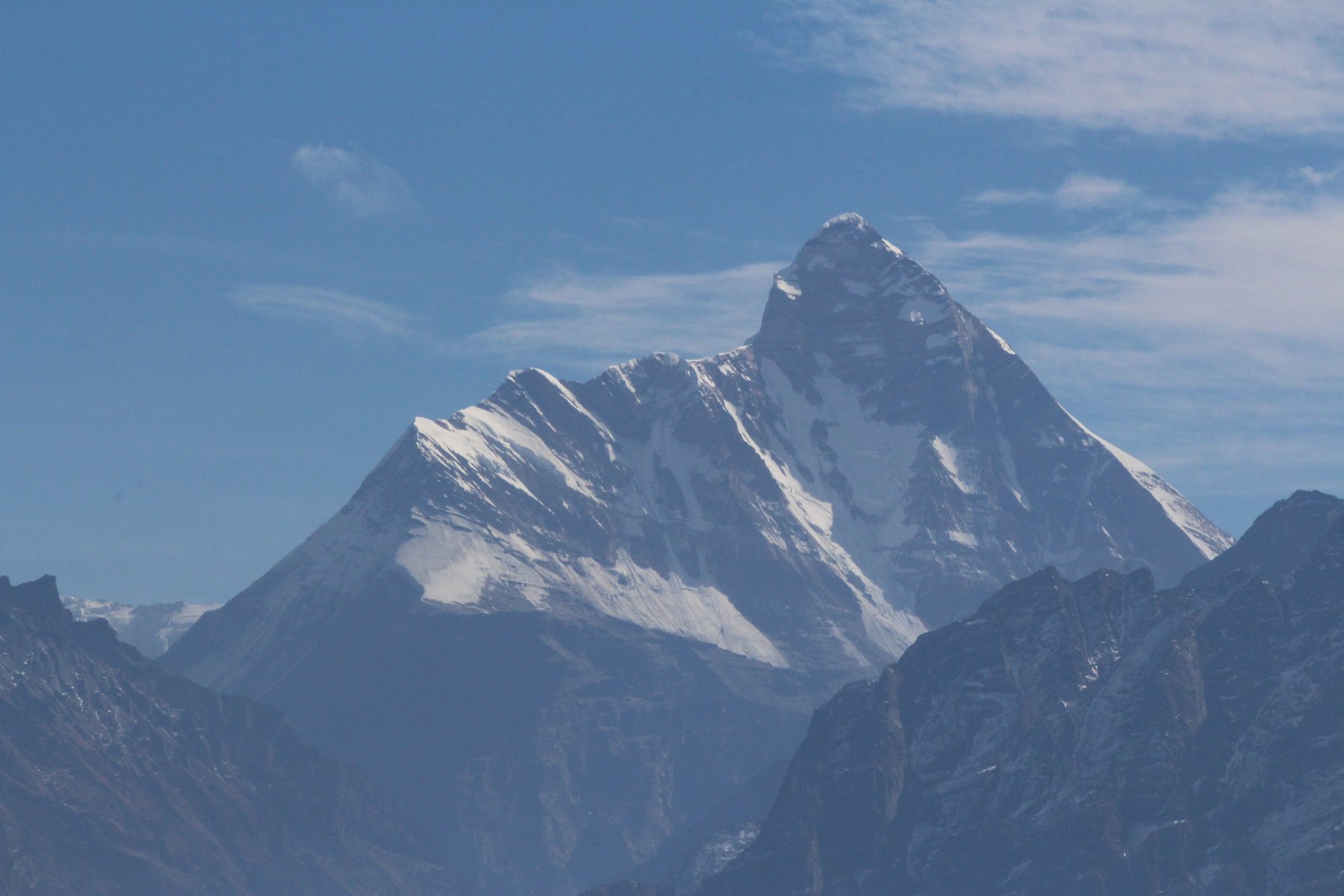
Photo: Vedang Narain, CC BY-SA 4.0
Nanda Devi itself isn't visible from Munsiyari — Panchachuli is the range that dominates the view here. To get anywhere near India's second-highest peak, you have to walk into the Johar Valley and keep going well past where most visitors turn back. The trek to Nanda Devi East Base Camp does exactly that: it follows the same Gori Ganga trail used for the Milam Glacier trek for its first stage, then splits off toward a much quieter and more remote destination at the eastern edge of the Nanda Devi Biosphere Reserve.
From Munsiyari the trail runs north along the Gori Ganga through Lilam and Bugdiyar — the same villages the Milam trek passes through — before turning off toward Martoli and Ghangar, both old Johari settlements, and then following the Panchu valley up to the base camp itself, at a little under 3,900m. Depending on the operator and exact itinerary, it's roughly a 100km round trip done over ten days to just over two weeks, including the drive to and from Munsiyari. It's rated moderate-plus to demanding — long trekking days, river crossings, and altitude high enough that acclimatisation and prior Himalayan trekking experience both matter. This is not a trek to attempt without a registered local operator and an experienced guide.
It's worth being clear about what this trek is and isn't. The Nanda Devi Sanctuary's core zone — the glacial basin ringed by peaks that surrounds the mountain itself — has been closed to trekkers and climbers since 1983, after decades of expeditions left behind waste and damaged the fragile alpine ecology; it's approached from the opposite, Garhwal side of the range and remains tightly restricted today. The East Base Camp trek from Munsiyari instead stays in the reserve's outer buffer zone, on the Johar Valley side, and has become accessible again in recent years with a relaxation of the Inner Line Permit rules that govern travel this close to the Tibet border. A Forest Department permit is required, arranged through your trek operator.
May to June and September to October are the windows operators generally recommend, for clearer trails and more stable weather. The monsoon months of July and August bring landslide risk and poor visibility on what is otherwise a dramatic, high-altitude walk, and the route is effectively closed by snow in winter.
SamathaStay in Sarmoli is a good base to plan a Nanda Devi East Base Camp trek from — message us on WhatsApp and we can help you think through timing and point you toward registered local operators for the days before and after.