A short trip from Munsiyari to a village of Bhotia weavers, where wool and Angora pashmina shawls are still made by hand on traditional pit looms — and can be bought straight from the women who make them.
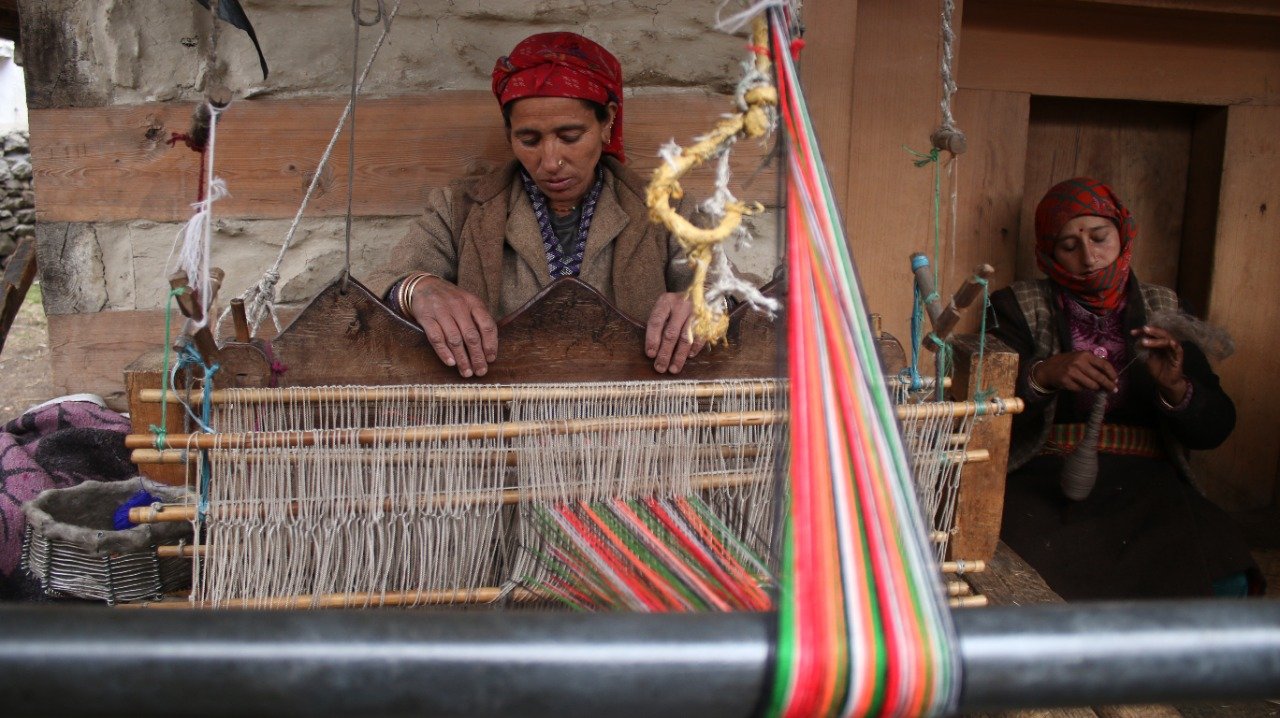
Photo: UNDP India, CC0 1.0
Darkot is a small Bhotia village a short taxi ride from Munsiyari, known less for scenery than for what happens inside its houses: household after household still runs a traditional pit loom, weaving wool and pashmina into shawls, stoles and caps the way families here have for generations. It's a good half-day stop for anyone at SamathaStay who'd rather see a living craft than another viewpoint.
Darkot sits roughly 6km from Munsiyari town, along a road that's largely a dirt track — a taxi is the easier option, though the walk is doable in around two hours if you're up for it and check conditions locally first. It's an easy add-on to a day that also takes in Munsiyari's market or the Nanda Devi Temple viewpoint, rather than a destination that needs a full day on its own.
The weaving in Darkot is mostly done by women, on pit looms passed down through families along with the skill itself. Sheep wool is the everyday material, but many households also keep Angora rabbits — reared under a government scheme introduced some years ago — whose fur goes into softer, finer pashmina shawls and stoles. Several women run their work through local self-help groups, and a finished pashmina shawl typically goes for somewhere in the range of ₹3,000–4,000. Walking through the village, it's common to see looms set up in doorways and courtyards, with weaving going on as an ordinary part of the day rather than a show put on for visitors.
Because most of the weaving happens at home, buying a shawl or stole in Darkot usually means buying it from the person who made it, rather than through a shop. Prices are reasonable and the income matters directly to the households involved. Beyond the looms, Darkot's older houses are built in the traditional stone-and-wood Kumaoni style worth a look in their own right, and the walk between houses gives a slower, more everyday sense of village life than Munsiyari's more visited stops.
March to June and September to October are generally the more comfortable months for the trip, with clearer roads and milder weather. As with most of the Munsiyari area, the monsoon months of July and August bring slippery, less reliable roads, and heavy winter snow can make the dirt track hard going from December through February — check locally before setting out in either season.
SamathaStay in Sarmoli is a short drive from Darkot — ask us about arranging a taxi, and about which weavers are usually around when you'd like to visit.