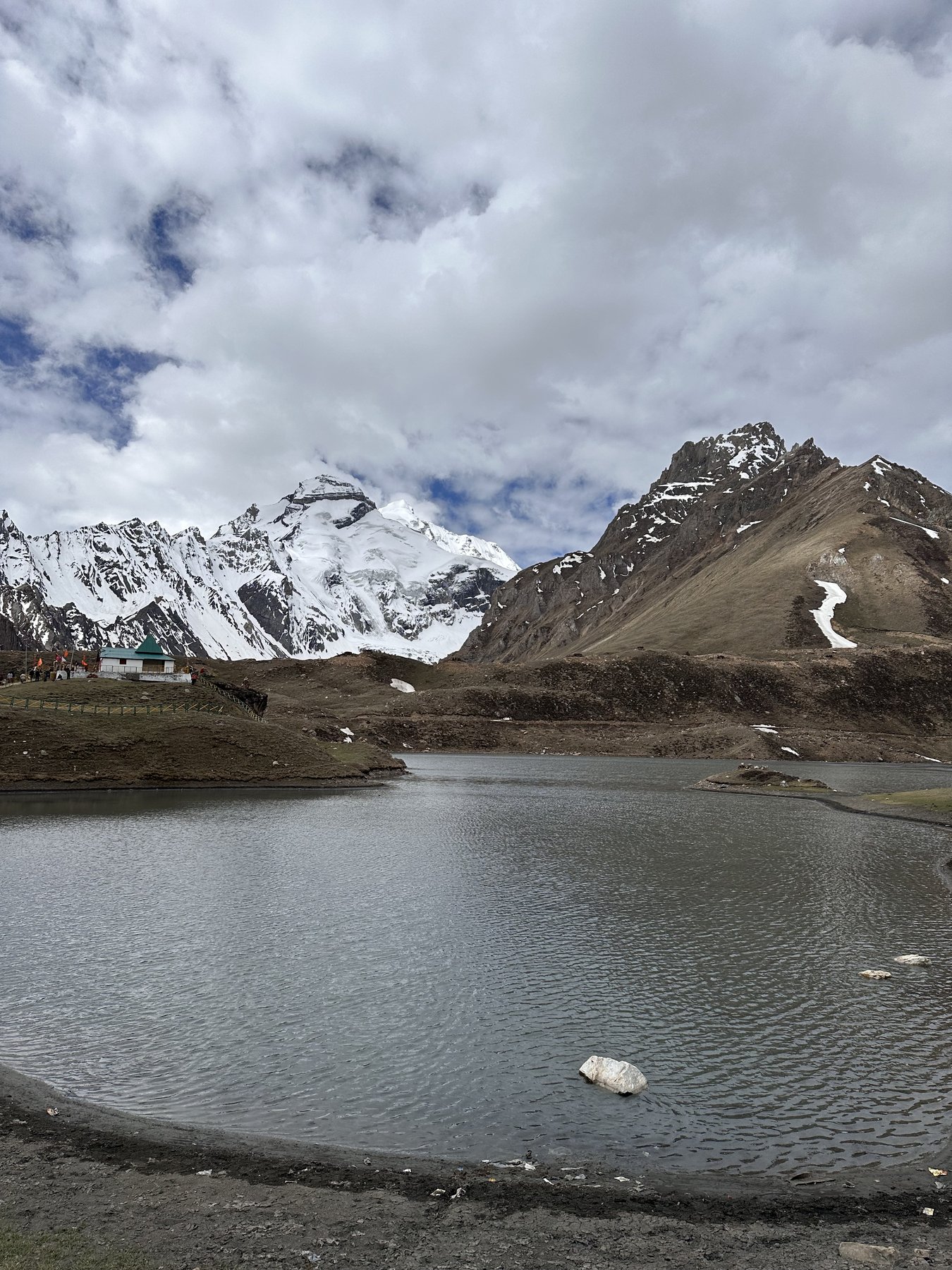
Adi Kailash and Om Parvat are two of the most striking sights in this stretch of the Himalaya, and both sit well beyond a day trip from Munsiyari. Adi Kailash, at 5,945m, is regarded as the second most important of the five Panch Kailash peaks and rises above Parvati Sarovar, a glacial lake near Jolingkong. Om Parvat, reached from a different point along the same road, is known for a natural pattern of dark rock and snow on its southern face that resembles the Devanagari ‘ॐ’. Most visitors see both on the same trip out of Dharchula, which makes sense given the planning and permits involved.
Getting to the trailhead
The yatra doesn't start in Munsiyari — it starts in Dharchula, itself around 90–100km and roughly 3 to 3.5 hours by road from Munsiyari via Jauljibi, on a stretch that can see landslides during the monsoon. From Dharchula, the road continues a further stretch, commonly quoted around 90km, to Gunji, the small settlement that serves as the base for both sights. A motorable road built in recent years has shortened what used to be a multi-day trek from Gunji toward Jolingkong considerably, while Nabhidhang, the viewpoint for Om Parvat, is reached by a separate road from Gunji. Reported distances for these final stretches vary a fair bit between sources and change as road conditions do, so it's worth confirming the current route with your operator rather than planning around any one figure.
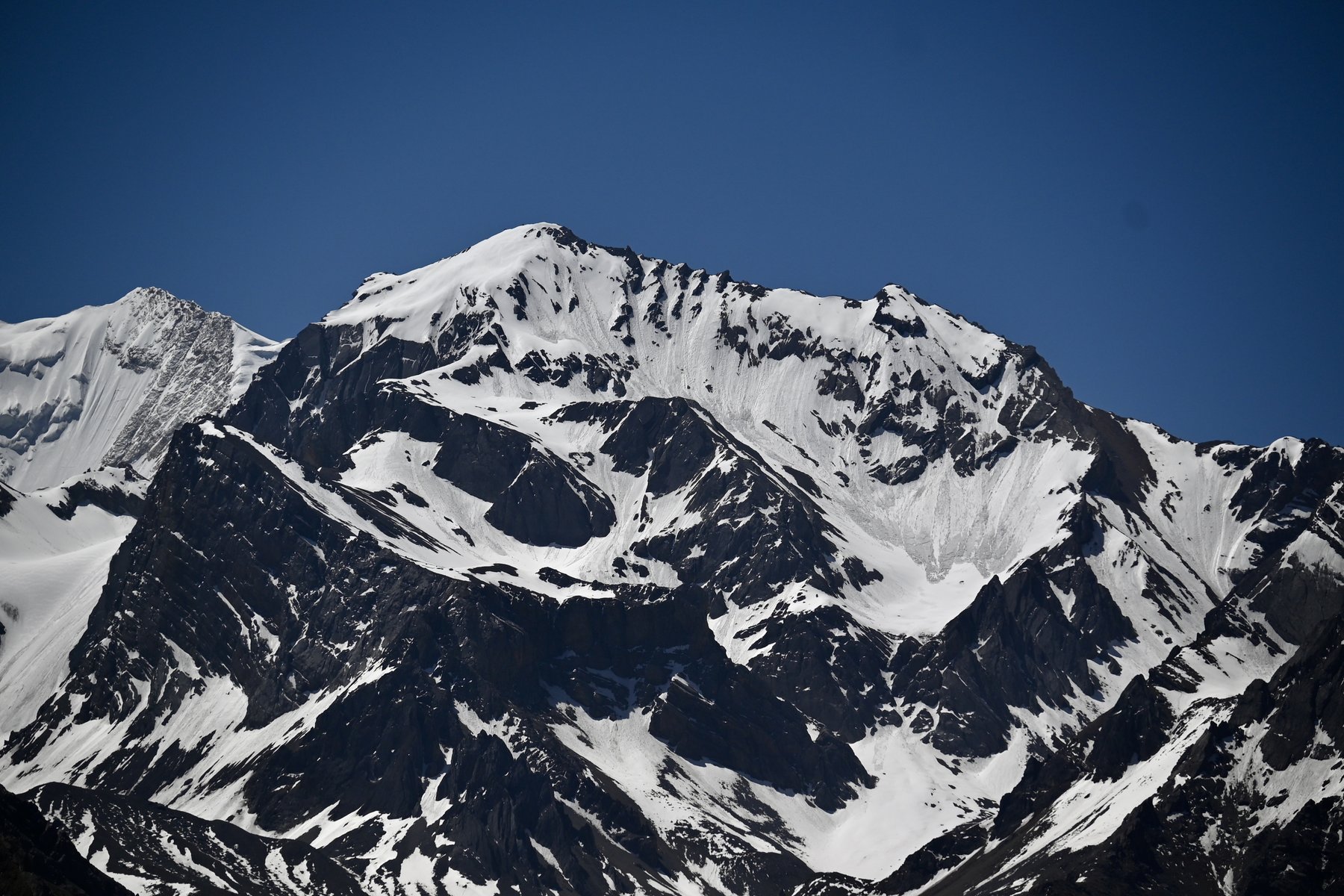
Two sacred sights on one trip
Adi Kailash is sometimes called Chhota Kailash or Shiva Kailash, and sits above Parvati Sarovar (also known as Gauri Kund), the glacial lake at Jolingkong that most itineraries treat as the highlight of the visit. Om Parvat lies in a different direction from Gunji, near Nabhidhang, and takes its name from the natural snow-and-rock pattern on its face said to resemble ‘ॐ’ — most visible roughly between late June and October, when partial snowmelt sharpens the contrast against the dark rock. The two are visited as separate short excursions out of Gunji rather than as one continuous walk.
Permits for the border zone
Because this route runs close to the India–Nepal and India–Tibet borders, an Inner Line Permit is required beyond Dharchula, arranged at the SDM office there with ID documents, photographs, and, depending on current rules, a basic medical check. Requirements along this stretch have shifted over the years, so treat this as something to confirm directly with the Dharchula administration or — more practically — through a registered trekking or taxi operator who runs this route regularly, which is how most visitors handle it.
Best time to go
May to June and September to October are generally the most reliable windows, with clearer roads and better visibility of both peaks. The Munsiyari–Dharchula stretch is prone to landslides during the monsoon months of July and August, and heavy winter snow closes the higher stretches beyond Gunji from around November through April.